Spells & Magic
How to Practice Runic Magic
This tutorial explains rune magic and how you can get started reading runes for divination. A great addition to your witchcraft.
Among the many forms of divination, rune magic is one of the oldest. A symbolic method of writing, runes have been used to foresee the future and imbue items with otherworldly power.
Whether you intend to use bind runes for charms or to look toward what has yet to occur, this guide will set you on your journey to practicing rune magic.
[[
](https://therelationshippsychics.com/wp-content/uploads/2023/11/PsychicsDraw-1200-×-300-px.hevc_.mp4)](https://shop.therelationshippsychics.com/optinskydp5t2)
What is Rune Magic?
The ancient Egyptians had hieroglyphs. The ancient Sumerians had cuneiform. And thousands of years later, the ancient Germanic peoples of Europe developed runes.
Scholars and historians agree that runes were, first and foremost, a communicative writing system. But in many cultures, writing and storytelling go hand-in-hand with developing myth and magic.
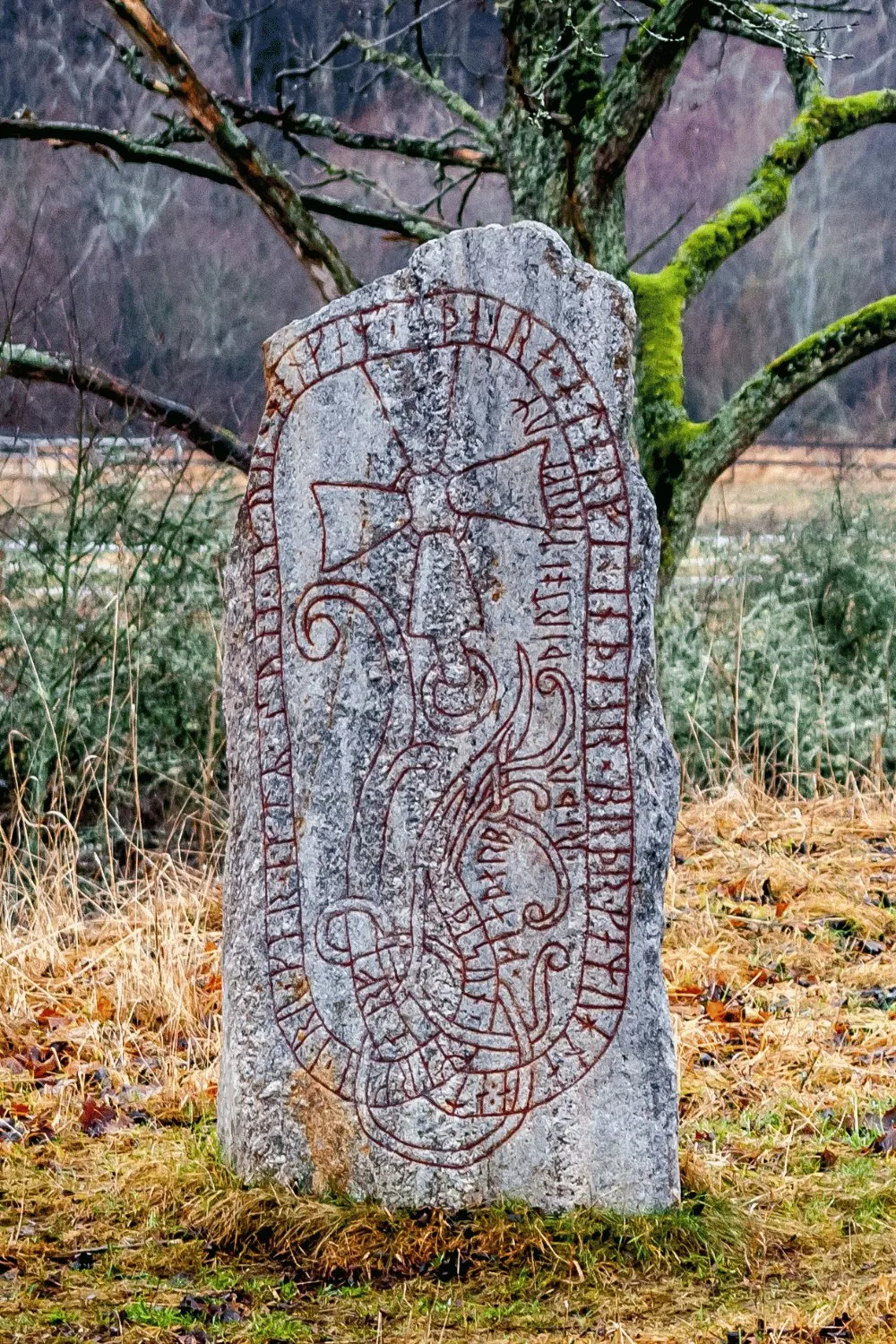
As a result, rune symbols were inscribed with Rune Magic. Medieval runic inscriptions are found throughout the artifacts of Europe, carved into everything from simple stones and bits of ceramic to weaponry and monuments. Viking travelers that ventured as far as the Middle East even carved runes into the mosques they visited.
Perhaps the most well-known users of runes were the Norse. Often remembered for their Viking warriors and epic mythology, the Norse had a rich culture that lives on today in the peoples of Northern Europe and the Scandinavian peninsula.
Rune symbols and meanings
While a few different runic alphabets exist, the Elder Futhark runic alphabet is the most commonly used to cast spells and practice magic.
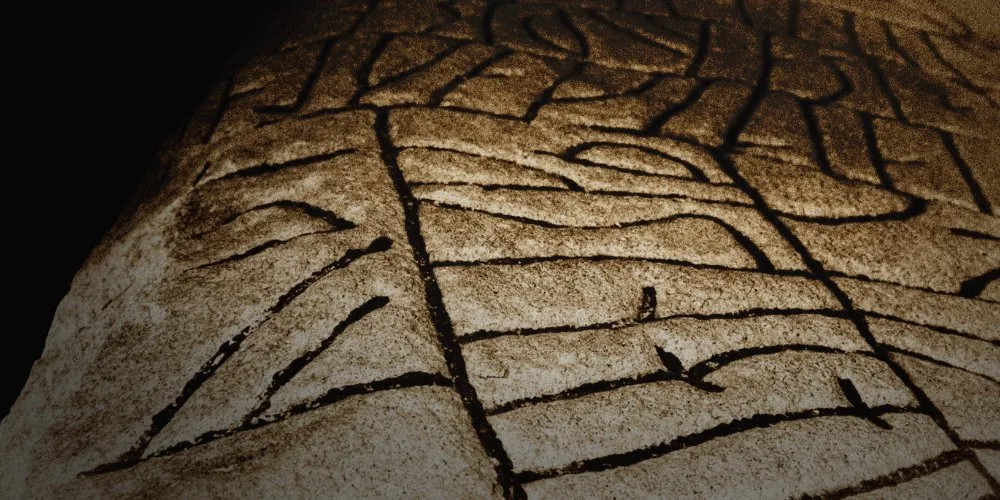
Elder Futhark’s runes are divided into three sets of eight for divination purposes. In the table above, each row represents one set of eight. Each of these three sets represents a different stage or aspect of life.
Below, we’ve outlined all 24 runic letters along with the sounds each rune corresponds to in the Latin alphabet, the traditional meaning of each rune, and the most common symbolic interpretations.
Freyr’s Aett
Freyr’s Aett is the first row (runes 1-8). In Norse mythology, Freyr is the god of peace, vitality, rain, and the sun. These runes speak to our connection with the physical, material plane.
(1) Fehu represents…
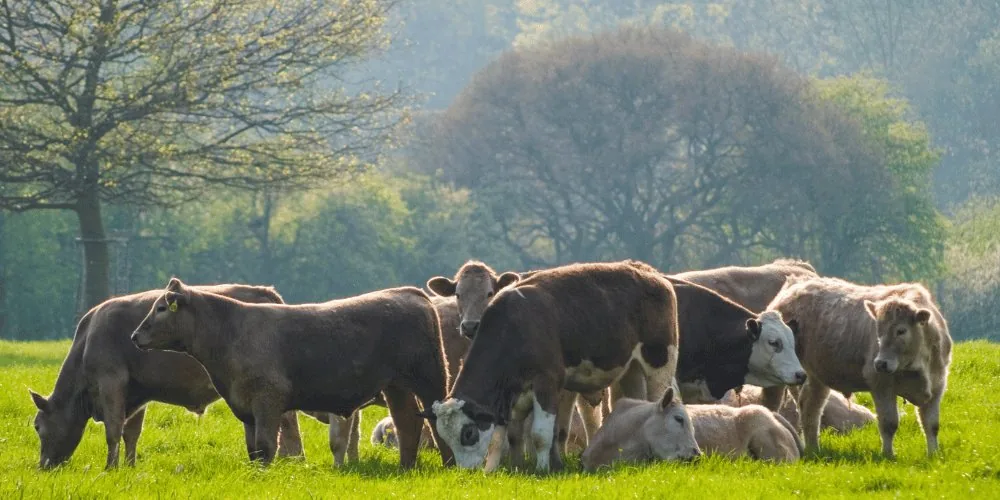
…the sounds of “f” and “v.” Its literal translation is “livestock” or “cattle,” but it is symbolic of wealth and prosperity.
(2) Uruz represents…
…the vowel sound of “u.” Its literal translation is “aurochs” (an ancient bull-type), but it symbolizes strength, freedom, and courage.
(3) Thurisaz represents…
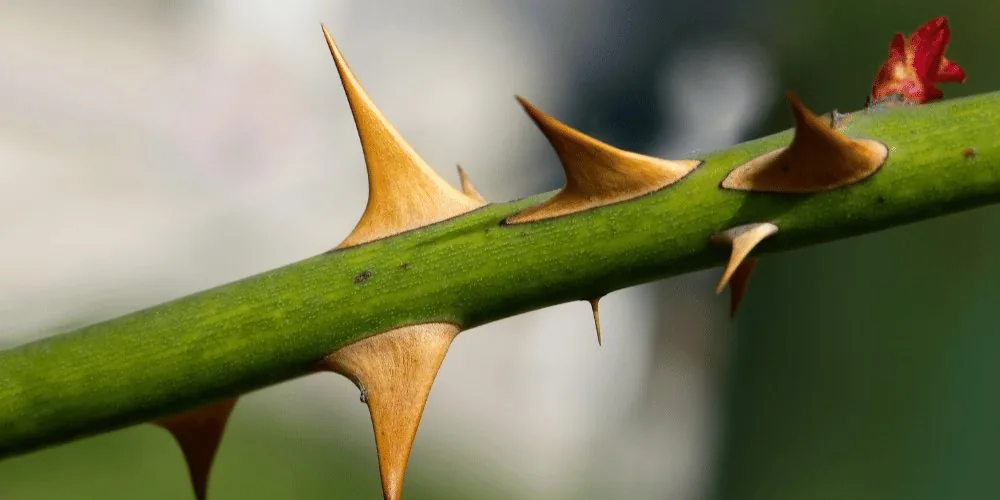
…the sound of “th.” Its literal translation is “thorn,” but it symbolizes reaction, defense, and catharsis.
(4) Ansuz represents…
…the vowel sound of “a.” Its literal translation is “estuary” or “mouth,” but it is symbolic of communication and understanding.
(5) Raidho represents…
…the sound of “r.” Its literal translation is “ride” or “journey,” but it symbolizes rhythm, evolution, and decision-making.

(6) Kennaz represents…
…the sound of “k.” Its literal translation is “torch,” but it symbolizes inspiration, vitality, and creativity.
(7) Gebo represents…
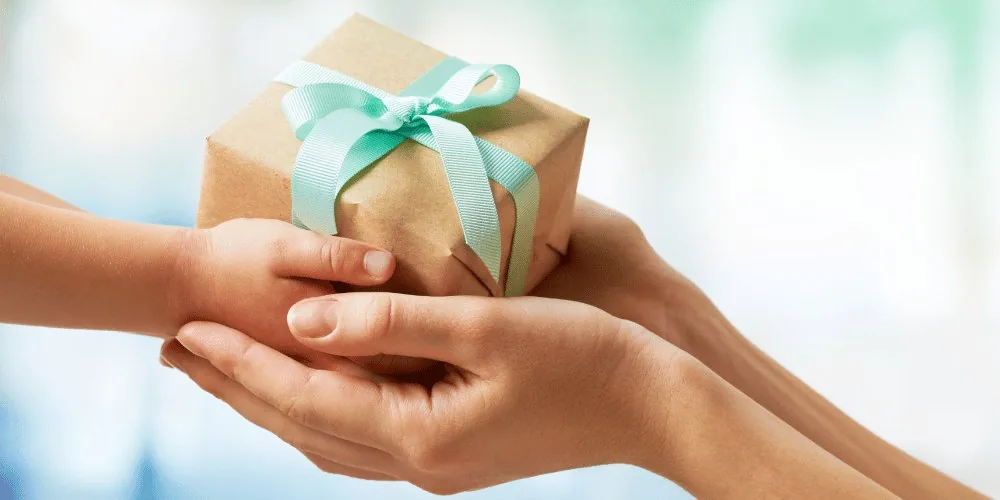
…the sound of “g.” Its literal translation is “gift,” but it symbolizes generosity, balance, and relationships.
(8) Wunjo represents…
…the sound of “w.” Its literal translation is “joy,” but it symbolizes bliss, comfort, and pleasure. These are sometimes called gladness runes.
Heimdall’s Aett
The second row (runes 9-16) is Heimdall’s Aett. In Norse mythology, Heimdall is the watchman of the gods. These runes represent our complex journey through life: triumphs, challenges, and transitions.
(9) Hagalaz represents…
…the sound of “h.” Its literal translation is “hail” or “precipitation,” but it symbolizes nature, wrath, and obstacles.
(10) Nauthiz represents…
…the sound of “n.” Its literal translation is “need” or “distress,” but it symbolizes restriction, willpower, and self-reliance.
(11) Isa represents…
…the long vowel sound of “i.” Its literal translation is “ice,” but it symbolizes clarity, stasis, and the process of watching and waiting.
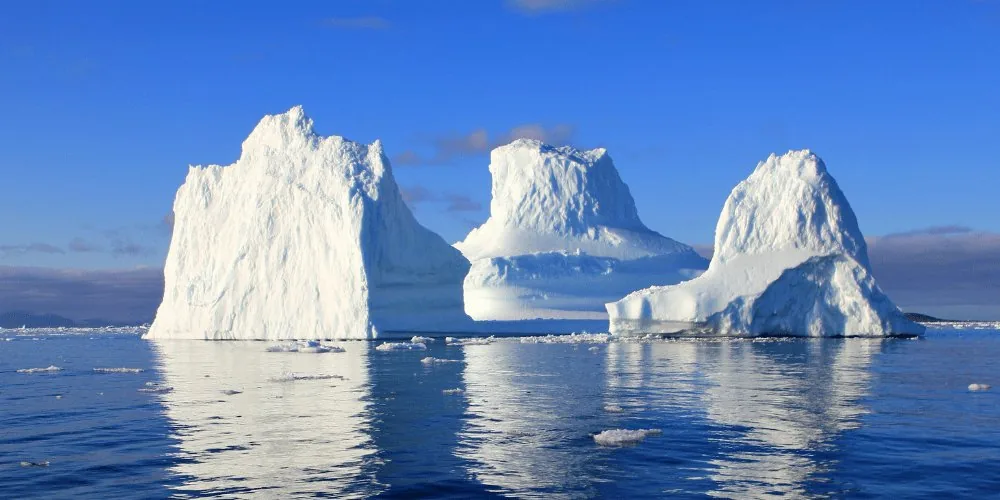
(12) Jera represents…
…the sound of “j.” Its literal translation is “harvest” or “good year,” but it generally symbolizes cycles, changes, and reaping the rewards.
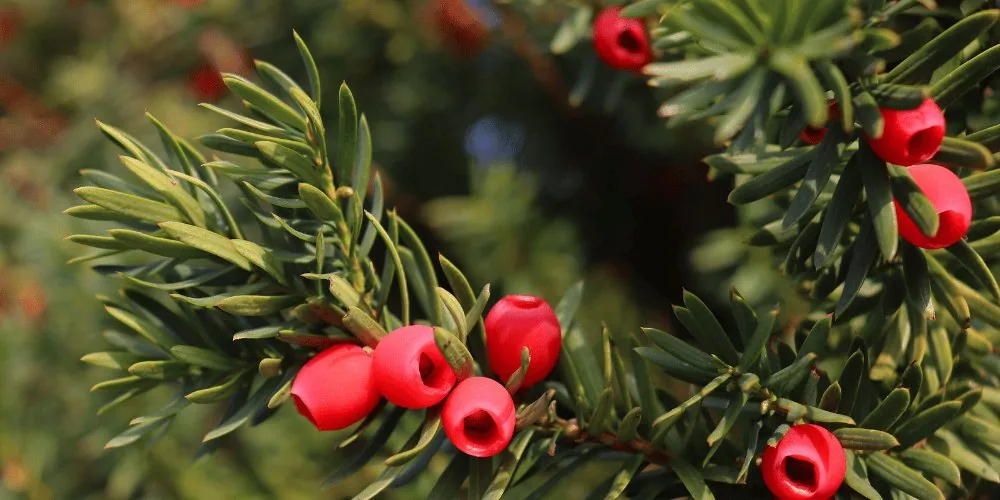
(13) Eihwaz represents…
…the short vowel sound of “i.” Its literal translation is “yew tree,” but it symbolizes balance, death, and The World Tree.
(14) Perthro represents…
…the sound of “p.” Its literal translation is sometimes “pear tree” and sometimes “dice cup,” but it generally means amusement, chance, and secrets.
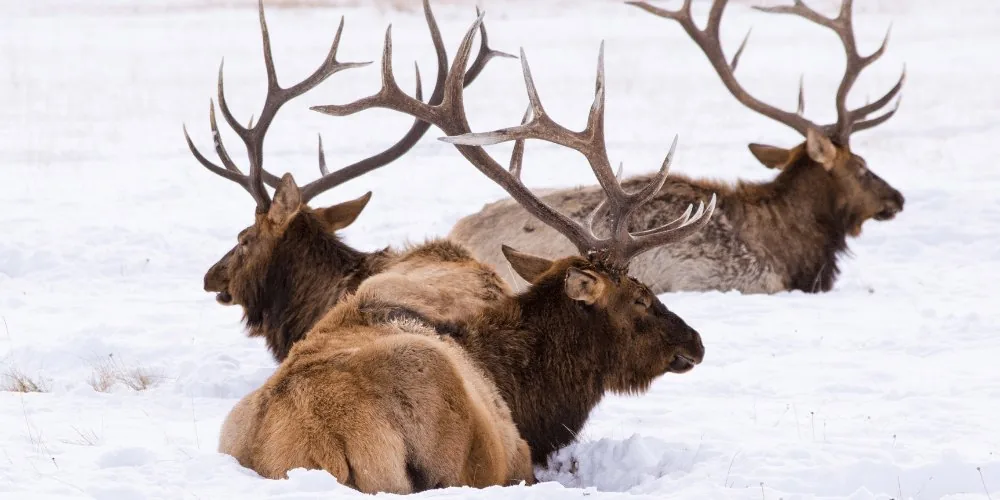
(15) Algiz represents…
…the sound of “z.” Its literal translation is “elk,” but it symbolizes defense, group effort, and guardianship.
(16) Sowilo represents…
…the sound of “s.” Its literal translation is “the sun,” but it symbolizes health, victory, and wholeness.
Tyr’s Aett
Tyr’s Aett is the third row of runes (17-24). Tyr is the Norse god of the sky. These runes symbolize our spiritual progress and our legacy.
(17) Tiwaz represents…
…the sound of “t.” Its literal translation is “the god Tyr,” but it symbolizes masculinity, justice, and leadership. These are sometimes called victory runes.
leadership image
(18) Berkana represents…
…the sound of “b.” Its literal translation is “birch tree,” but it symbolizes femininity, healing, and regeneration.
(19) Ehwaz represents…
…the vowel sound of “e.” Its literal translation is “horse,” but symbolizes movement, progress, and trust.
horse image
(20) Mannaz represents…
…the sound of “m.” Its literal translation is “humanity,” but it symbolizes individuality, friendship, and help.
(21) Laguz represents…
…the sound of “l.” Its literal translation is “water” or “lake,” but it symbolizes intuition, flow, and dreams.
water flowing image
(22) Inguz represents…
…the sound of “ng.” Its literal translation is “seed,” but it symbolizes growth, common sense, and the Hearth.
(23) Othala represents…
…the sound of “o.” Its literal translation is “heritage,” but it symbolizes ancestry, experience, and value.
heritage image
(24) Dagaz represents…
…the sound “d.” Its literal translation is “dawn” or “day,” but it symbolizes awakening, certainty, and hope.
(?) Blank Rune Stone
The blank rune stone is not included in the above table. The 25th stone in a rune set, the bare rock–sometimes called Wyrd–is a newer addition to runic magic and is regarded by some practitioners as invalid.
However, we have to imagine that a blank stone or disc could have appeared in reading at some point in the long history of casting rune stones. Did the reader disregard it? Or did they interpret it as meaningful?
If Wyrd shows up in a reading, it’s typically interpreted as a sign to end a line of query or at least understand that the question has fateful consequences. It’s a good indicator that you need to take more time to think about your question before you take action.
Or sometimes, it just means the answer to the question is none of your business and should be left to the fates.
How to Divine with Rune Magic
Rune divination has a lot in common with the reading of tarot cards. Like tarot, runes require a diviner to pull several symbols and use their intuition to interpret what the runes are trying to say. Runes can be cast to ask for general guidance or read to evaluate something as specific as your birth runes.
How to Pull Runes
Rune Magic is typically pulled in odd numbers.
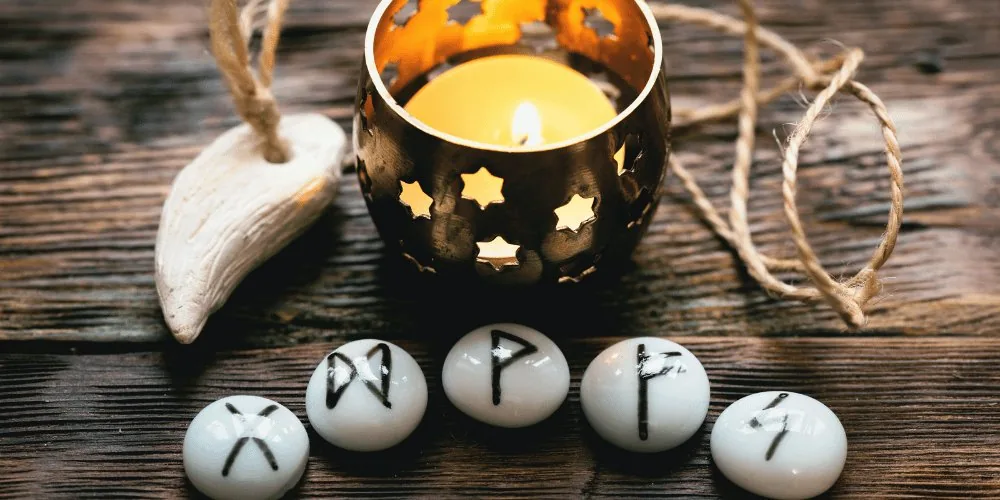
Pulling a single runestone can be done at the start of the day to determine your outlook and priorities. Individual runes can have a lot of nuances, so even a single symbol can be filled with meaning.
A three-stone pull is most common since many concerns can be divided into three aspects: past/present/future, problem/solution one/solution two, problem/cause/solution, etc.
At the beginning of the year (or on their birthday), some practitioners pull all 24 stones and interpret them into a story that foretells the coming year.
However, many runes you decide to pull, and whatever your rune layout looks like, you can choose from two primary removal methods (also called rune casting).
The first requires you to be flexible and open to going wherever the runes decide. Take a chosen number of runestones (most, if not all), and toss them onto a special cloth while looking at the skies.
You then read whichever stones appear to face up (showing the rune). This method takes some practice in following your intuition since there isn’t a guaranteed structure into which the rocks can be placed.
The more structured method of reading runes is to pull directly from the set. Most practitioners keep their rune stones in a small pouch or box. Hold the container in your non-dominant hand, think clearly of the question you’re hoping to investigate and pull one rune at a time with your dominant hand until you have the number of runes you desire.
Like tarot, practitioners can use various rune spreads to do their readings.
How to Read Runes
reading is an interpretive art that takes time and practice to master. But understanding runes is also an intuitive skill that encourages you to find the story within the runic inscription.
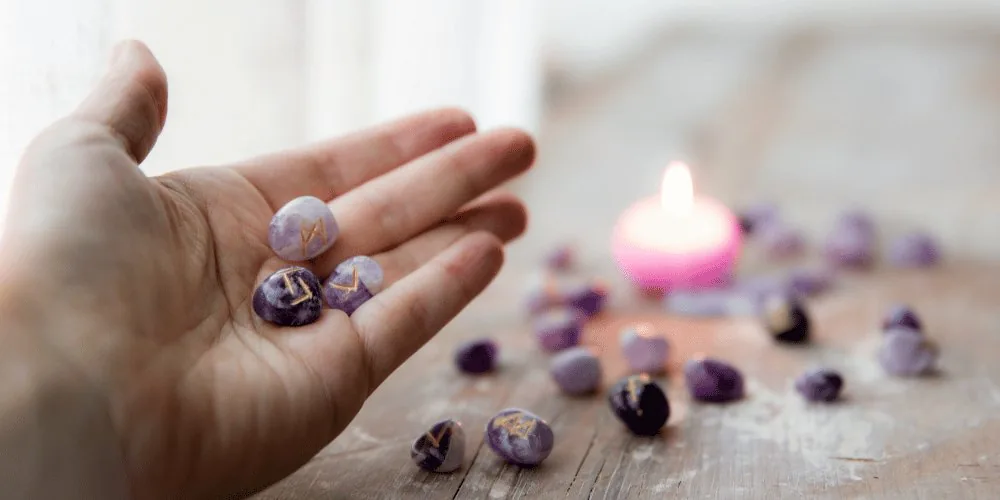
Runes won’t tell you the definitive future, but they will point toward past and present influences to suggest some future wisdom.
Let’s run through an example with a detailed past/present/future casting.
Before you start, choose your space and cover the surface with a white cloth. (This was the tradition in the Middle Ages, and tradition is part of both the magic and power of divining with runes.)
Take a few cleansing breaths to clear your mind of superficial, worldly concerns, and focus as intently as possible on the question.
Imagine you pull the following three runes after asking, “What should I focus my energy on this week?”:
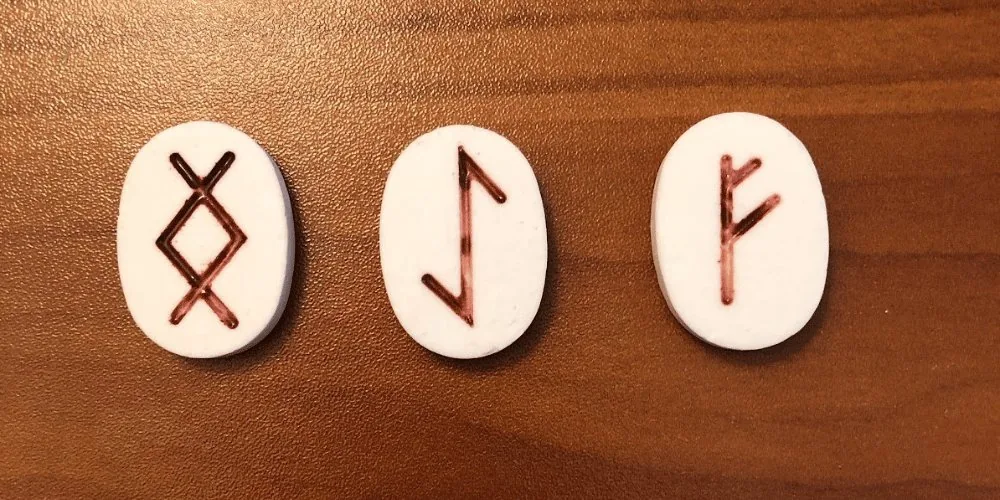
On the left is Inguz, the Seed rune. In the center is Eihwaz, the Yew Tree. On the right is Fehu, the Cattle rune.
Inguz represents your past influences–growth, common sense, and home. Eihwaz represents your present influences–balance, death, and The World Tree. And Fehu is representative of your future–wealth and prosperity.
At this point, you’ll have to dig into the interpretation. These runes may inspire different meanings depending on what’s happening and have happened in your recent past. You want to look for a story–some narrative to spark action in you.
One possible interpretation?
You’re currently in a stagnant place (death) in at least one aspect of your life. But if you look back towards your roots (home) and use common sense, you’ll find success going forward (prosperity).
The practical advice? Call an old friend from home or your mom or high school soccer coach who always gave you good advice. Conversation with someone who knew you earlier can be a refreshing element to your current mindset.
Where to Find Runes
Rune Magic stones can be purchased or made.
Most metaphysical shops carry various rune sets, from simple wooden discs to carefully crafted crystals. This is a great place to start until you’re comfortable and familiar with each rune symbol and what it means.
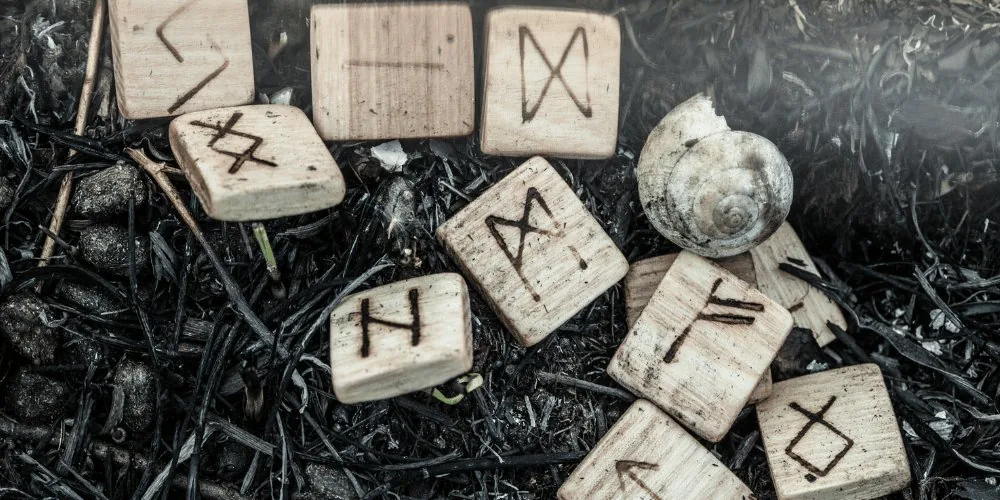
But when you feel prepared, you can make your rune stones by painting or carving the markings into stone or carving or burning them into the wood. Carving runes with intention will have power beyond compare because they came from you.
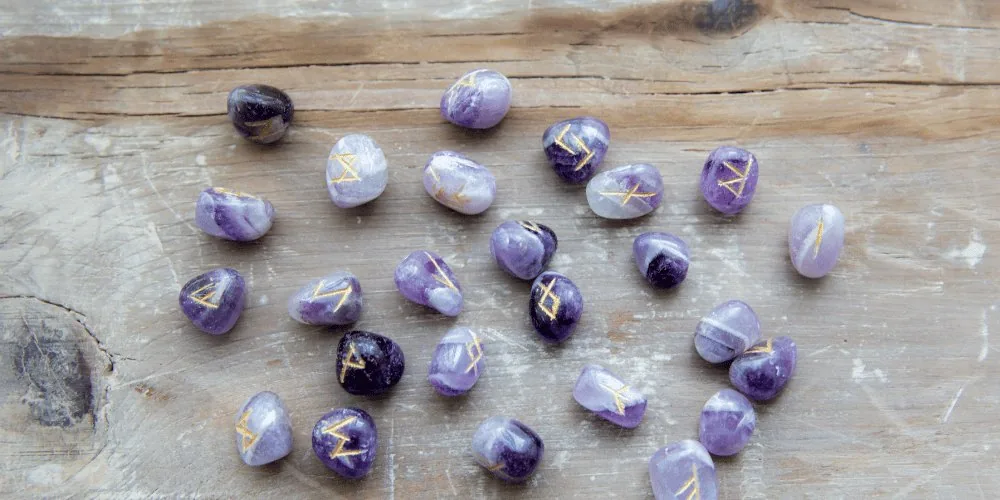
The most important thing is to choose a set of runes that feel good to you. Are they comfortable to hold? Do you like the weight and heft of them? Are they aesthetically pleasing to you? The more you want the sensory experience of something, the more likely you will use it. Runes are no different!
How to Make Bind Runes
Outside of divination, runes can enchant, protect, charm, or even curse an item. One of the earliest recorded examples of this practice is runic inscriptions carved into a sword hilt, begging the gods to bless it with their power.
You may not need to protect yourself in battle, but bind runes can be a great way to cast a charm on just about anything.
Perhaps more so than singular runes, bind runes are magical symbols.
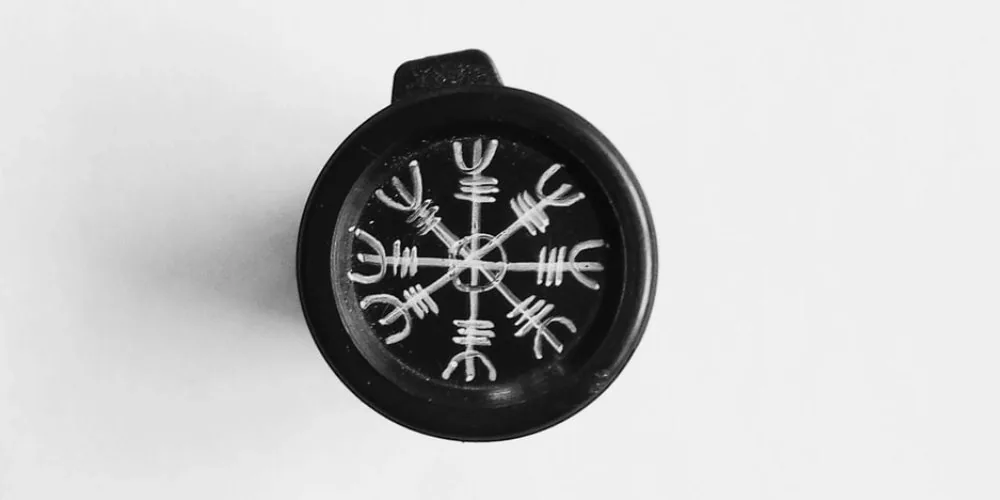
One of the most famous examples of a bind rune is the Rune Magic stave, Aegishjalmur. The eight spokes of this sigil are repetitions of the rune Algiz–the Elk rune that represents protection and defense. Invoking the same rune repeatedly serves as a kind of mantra, intensifying its power of it.
How to Make Personal Sigil
This bind rune generator will let you choose up to five runes and arrange them in whatever shape you like.
I took the sigils that represent all the sounds in my first name (omitting repeated letters/sounds)and arranged them into a bind rune that I can use as a personal sigil.
This can be a great place to start in making bind runes. But you don’t have to translate letters or sounds from English into the runic alphabet. You can make a bind rune or a protective sigil by choosing runes for their symbolism.
You can draw it onto anything you own that you hope to keep safe.
The possibilities are genuinely endless.
Just remember that symbols have meanings.
[[
](https://therelationshippsychics.com/wp-content/uploads/2023/11/PsychicsDraw-1200-×-300-px.hevc_.mp4)](https://shop.therelationshippsychics.com/optinskydp5t2)
Looking to chat with a psychic now?
Connect with our psychics right away by installing our app Mystica Psychic Readings.