
Spells & Magic
Witchcraft 101: Grimoires
This comprehensive guide walks you through some of the most famous and influential grimoires of all time so you can learn to make your own.
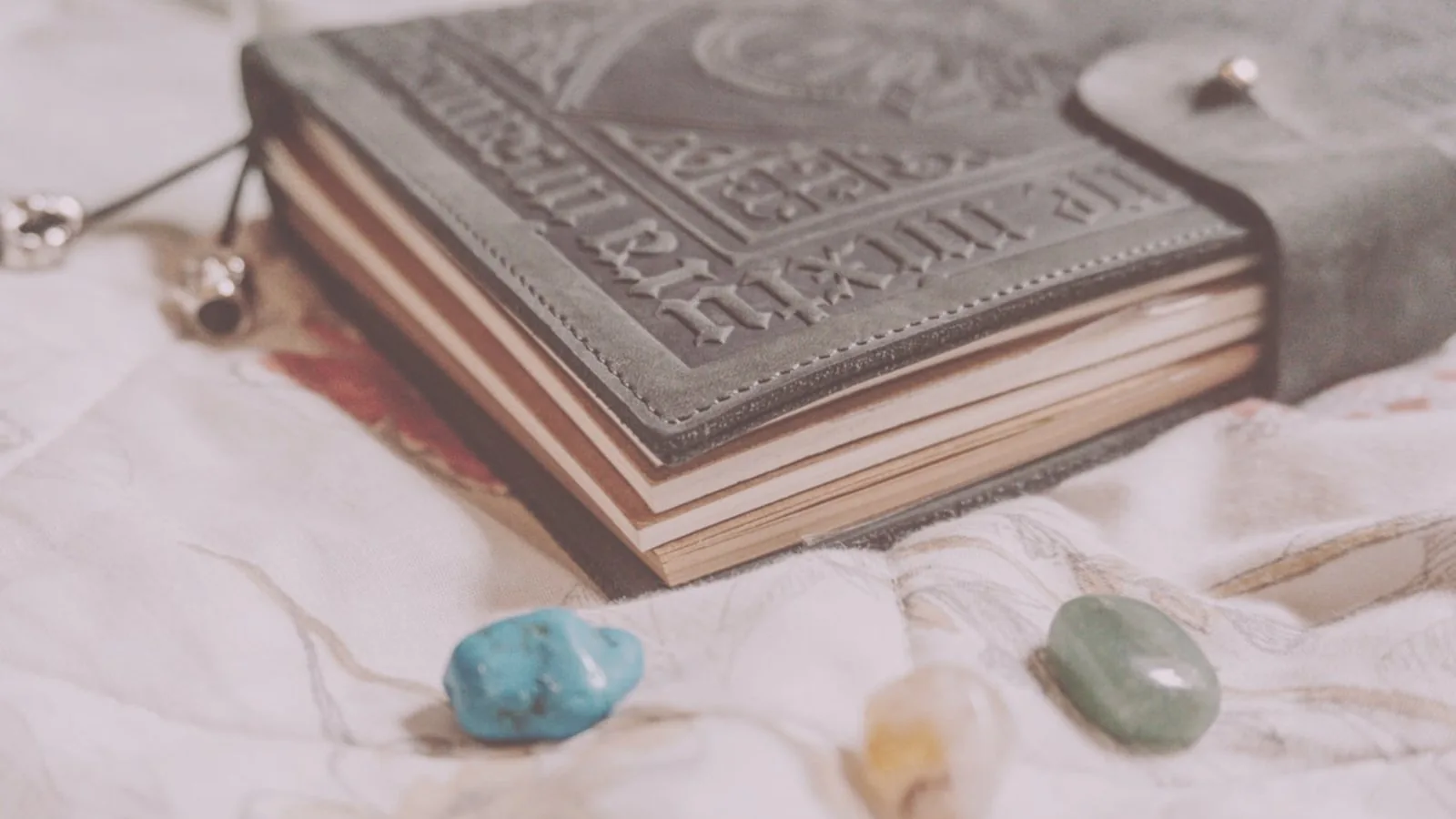
Grimoires. As witches develop their craft and practices over time, they invariably feel drawn to certain magic spells. It’s inevitable, and everyone has their favorites.
And most witches like to keep track of what works well for them–often in a spell book. These magic books can be as simple or complex as you like, ranging from a primary journal to an adequately printed and bound tome.
Meet the grimoire. In this article, we’ll teach you everything you need to know about this crucial element of witchcraft and recommend a few famous grimoires to check out and incorporate into your rituals.
[[
](https://therelationshippsychics.com/wp-content/uploads/2023/11/PsychicsDraw-1200-×-300-px.hevc_.mp4)](https://shop.therelationshippsychics.com/optinskydp5t2)
What is a grimoire?
Put, a grimoire is like a magician’s manual.
The craft can get complicated! As a new witch, you may find yourself overwhelmed with the possibilities of magic. And given the power of magic, it’s best not to go in blindly, lest you dabble in black magic without meaning to.
Origins
‘Grimoire’ didn’t start associated with magic at all. It began as a French term referring to any book written in Latin.
In the medieval European period, Latin grammar and language were used to document and chronicle anything meant to be preserved in writing. Different regions used their local languages to converse and communicate daily, but books were almost always written in Latin.
As time passed and books started appearing in French, Spanish, and English, a book written in Latin, Grammatica was understood to be old, tried, and accurate information.
Some of these old books contained magical knowledge, and as ordinary people forgot the old ways, those books became more difficult to comprehend. This gave them a certain mystique that appealed to practitioners of occult philosophy.
And so ‘grimoire’ became synonymous with magical texts.
N****eo-PaganismGrimoire book with candles
As part of the Neo-pagan revival in the nineteenth century, grimoires became a critical part of ceremonial magic.
They were still practical, providing valuable instructions and guidance in occult learning. But they also held great power as physical objects, full of spiritual and mystical energy that enhanced any ritual they used.
As a result, old grimoires are both manual and artifact, and any witch who possesses one greatly values it.
Famous Grimoires
Plenty of ancient and historical grimoires have survived to the present day for us to absorb wisdom. We’ve made a list of some of the most famous and influential grimoires, written by figures ranging from the near mythological–like King Solomon–to the founders of new religions. Some of them even influenced writers like H.P. Lovecraft and Sir Walter Scott.
The Sixth and Seventh Books of Moses
Despite its name, this mysterious book isn’t as old as you’d think–but it’s been tremendously influential. It’s not genuinely believed to be lost books written by Moses. Still, it contains incantations and symbology deeply contained in old Hebrew texts and taps into the magic of the Old Testament. It’s been invaluable to folk magic in the United States, the Puritan circles of Pennsylvania, Dutch country, and even the foundation of Rastafarianism.
The Necronomicon
This grimoire might have been fiction, but its influence led to the publication of several authentic Necronomicon. Its name comes from Greek and translates roughly to “book of the laws of the dead.” It should be no surprise that many magic practitioners interested in necromancy and dark magics love this text.
The Book of Shadows
A much more recent grimoire, this foundational text of Wicca, has had substantial cultural impacts. Was it transcribed from a copy of an ancient text gifted to early the religion’s founders by a coven of witches? It’s hard to say. But it was pivotal for establishing the practice of witches creating their grimoires. And while its origins are a little mysterious, its contents are pretty pragmatic.
Petit Albert Grimoire
This handy little book caused a stir in France, becoming a phenomenon and a meme in the early 18th century. Part of its popularity came from how cheaply and quickly people could publish and distribute it. But the rest was due to its practical and utterly charming instruction on everything from cooking recipes to sex magic. The Catholic Church was appalled.
The Fourth Book of Occult Philosophy
The German philosopher Heinrich Cornelius Agrippa wrote three books on occult philosophy. These informative texts explained the customs of Kabbalah, hermeticism, and Neoplatonism. After his death, someone released a fourth book under the same title, full of darker themes, including spirit conjuration. Because its publication happened in the 16th century during witch trials, it was marred as taboo and evil.
The Book of Honorius
This grimoire dates back at least as far as 1347, when it was a reference text for performing necromancy. In truth, it contains information on everything from how to save your soul from purgatory to how to stop thieves. It’s a great example of how the earliest grimoires weren’t exclusively magical texts- they were handy guides for life.
Dragon Rouge Grimoire
This French grammar was a much larger text related to the Petit Albert and otherwise known as the Red Dragon. It was essentially a compilation and re-release of information in another text called the Grand Grimoire. However, its publication happened at such a time that it circulated much further than its predecessors. It went so far as to reach the French Caribbean colonies and influenced the region’s development of folk magic.
The Book of St Cyprian
These are a collection of grimoires that are all given roughly the same attribution and title, even though their contents vary. The natural, historical St. Cyprian of Antioch was a magician in most people’s minds across Europe. While he did not pen a grimoire, many used his name to refer to a series of occult texts written in the Iberian peninsula and Scandinavia in the 17th, 18th, and 19th centuries.
The Magus
This one was mostly plagiarism of the Fourth Book of Occult Philosophy (with the addition of information on invoking demons). It didn’t see much success when published in the 17th century. But philosophers and occultists picked it up during the occult revival of the 19th and 20th centuries. As a result, it’s still influential to Wicca and Neo-paganism.
The Clavicle of Solomon Grimoire
So maybe we saved the best for last…
Occult texts purportedly written by King Solomon were circulating the Mediterranean as early as the first few centuries AD. But this grimoire–known as The Key of Solomon–was a compilation of these texts published during the European Renaissance. Everyone from early scientists to men of the Church turned to this grimoire for insight and wisdom. While some denounced it as heretical, many considered it the perfect blend of Christianity and mysticism.
[[
](https://therelationshippsychics.com/wp-content/uploads/2023/11/PsychicsDraw-1200-×-300-px.hevc_.mp4)](https://shop.therelationshippsychics.com/optinskydp5t2)
Looking to chat with a psychic now?
Connect with our psychics right away by installing our app Mystica Psychic Readings.