
Spells & Magic
How to Celebrate the Wheel of the Year
Each year, the wheel of the year is made up of eight Sabbats or festivals that occur on or around the same day. Reach us out today .
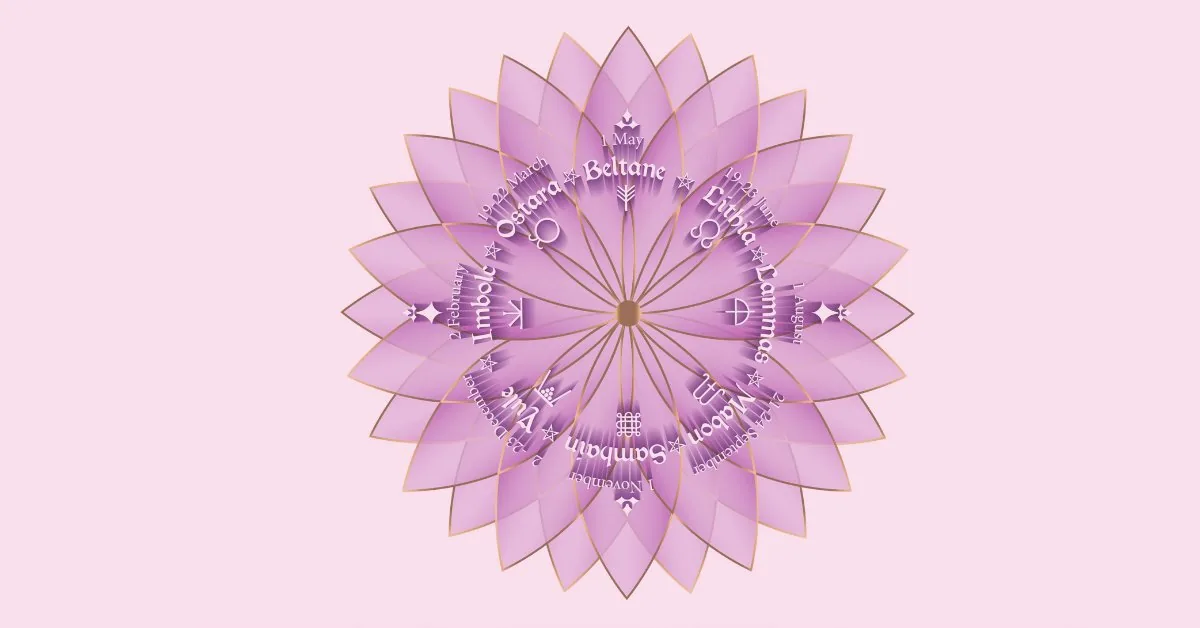
The wheel of the year: According to pagan traditions, every year is part of a tremendous seasonal cycle. The magic and power of the world come from nature’s never-ending shifts from one season to the next. This cycle is known as the wheel of the year.
Even modern, non-pagans recognize the change in seasons all over the world. It dictates what we can do at any given moment in life. While the seasons will pass on without our interference, observing and celebrating them can be healing and helpful.
The result: seasonal holidays.
Cultures and religions worldwide believe properly welcoming or saying goodbye to a season can bring abundance, peace, fertility, happiness, and luck. Some even believe that the proper celebration of seasonal holidays can prevent the wrath of the gods and stave off misfortune.
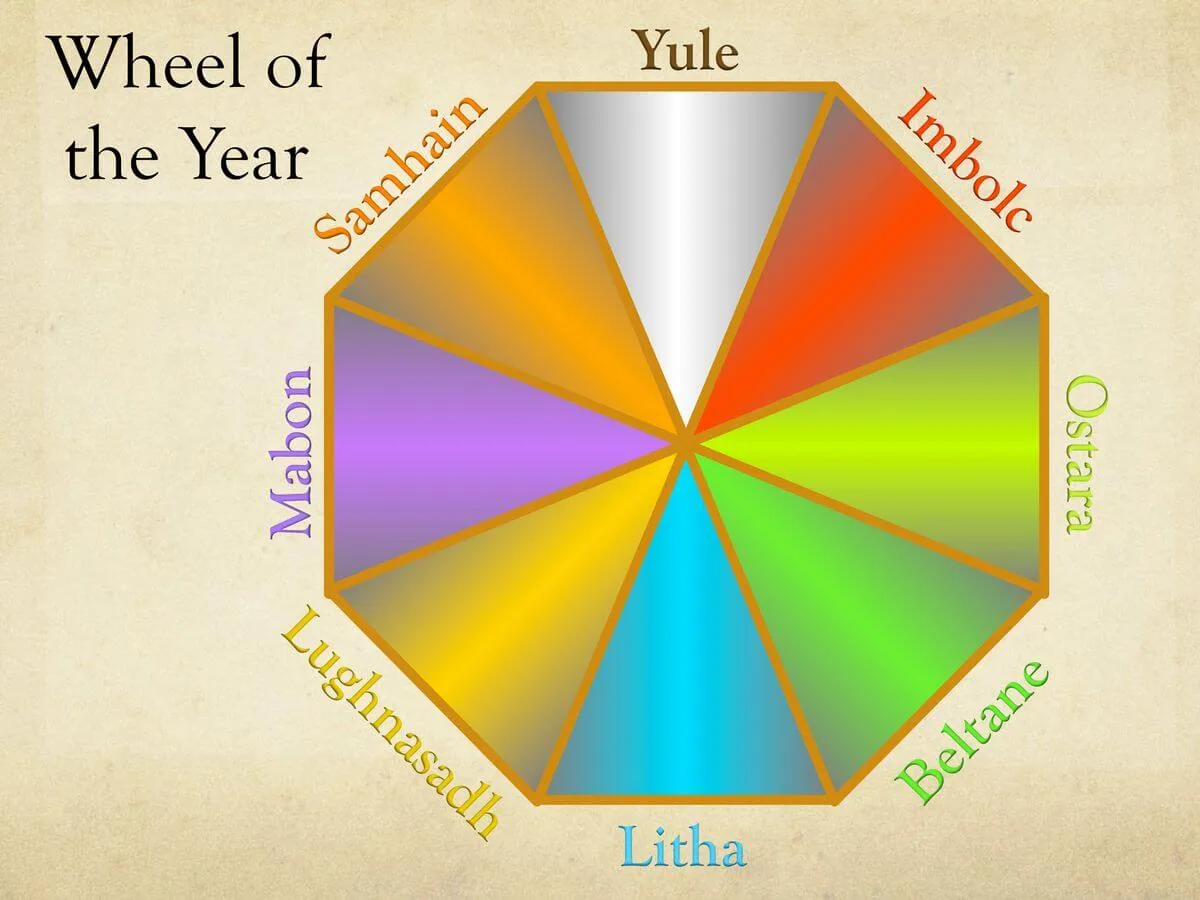
Historically, Celtic pagans held eight festivals annually to observe the changing seasons. As Christianity spread, many of these festivals were blended with religious holidays–Easter and Christmas are two of the most lasting mergers. Chances are, you’ve been observing old pagan traditions without even realizing it.
But modern paganism and Wiccans have brought the original eight sabbats back into celebration.
The wheel of the year roughly corresponds to all cycles of life. The four quarters divide the annual process, the creation of new life, and the progress of one person’s lifetime.
Roughly divided, the first quarter represents spring/fertility/infancy, the second represents summer/growth/youth, the third represents autumn/fruition/adulthood, and the fourth represents winter/waning/death.
This process runs like a thread through every aspect of life. Understanding it will better prepare a witch to work with nature rather than against it.
This quick guide will outline each of the eight holidays, what they mean, and how you can incorporate their observance into your witchcraft practices.
[[
](https://therelationshippsychics.com/wp-content/uploads/2023/11/PsychicsDraw-1200-×-300-px.hevc_.mp4)](https://shop.therelationshippsychics.com/optinskydp5t2)
Imbolc
Since the wheel of the year is a circle, there’s no particular beginning or end. But we’ll start with Imbolc, as it’s the first festival according to our standard Gregorian calendar.
Imbolc is one of four cross-quarter days falling at the start of February. The Wiccan calendar marks the beginning of the spring season and the waxing period of the year. From here on out, the sun will grow brighter and shine longer daily.
In Catholicism, it is typically observed as St. Brigid’s Day. Though St. Brigid is a Christian figure, she is based on the Celtic goddess Brigid–the deity of poetry and firelight. Thus, Imbolc is the season of creative spark and the survival of flickering light.
Because Imbolc represents the start of spring, it’s the perfect time for cleansing rituals. Do a bit of spring cleaning and open up your windows on the first sunny day. This will welcome new energy into your life and get your creative powers flowing.
Ostara
Falling somewhere between the 20th and 22nd of March, Ostara is the celebration of the spring equinox. Day and night are perfectly equal on Ostara as the sun crosses the equator line in our yearly revolution. This equilibrium also extends to other aspects of life: light and dark, masculine and feminine, inner and outer.
While Imbolc is the start of spring, Ostara is its heady peak. Flowers bloom, trees bud and wild animals are born. Ostara, the Celtic goddess of fertility and rebirth, manifests the renewal Imbolc promised in a whisper.
Most of the snow has melted, and the frost is gone.
Many traditions we associate with Easter are rooted in celebrating the spring equinox. Ostara is represented by rabbits and eggs–two symbols of fertility and creation. The yellow yolk of the egg symbolizes the Celtic sun god, robed in the White Goddess—a balance between inner and outer.
Celebrate Ostara by planting seeds, gathering flowers for your altar, or burying an egg outside the entrance of your home to guarantee abundance in the coming year.
Beltane
The start of summer.
The wheel of the year: Beltane takes place at the beginning of May to signify the great boom of life. The word itself derives from the name of the sun god, Bel. Bel’s fire is integral to the celebration, as massive bonfires are lit to honor the sun.
Where Imbolc and Ostara invoke fertility, Beltane represents conception. This is the moment of the year wherein all that was potential is made real. Energy manifests, life blooms all around, and the sun starts its ascension in the heavens.
While flames are involved in all seasonal festivals, bright fire is significant to Beltane’s festivities. Traditionally, Beltane symbolized the great green wedding between humanity and the sun god, resulting in a life-giving fire.
As a result, Beltane was the most common time to hold hand-fasting ceremonies. Young couples in love would join hands and exchange promises for the coming year. If, after a year, they were no longer enamored, they could part ways without consequence.
Beltane is a time to explore possibilities.
While you don’t need to run off and get married to observe Beltane, the spirit can remain the same. Dress in your best and craft a flower crown. Celebrate the world’s vitality in full bloom, spend all night beneath the stars, find someone that excites you, and kiss them with wild abandon.
Litha
The Wheel of the Year: The grand midsummer celebration.
On this day of the summer solstice (landing somewhere between June 20th to the 22nd), the sun is at its peak. Litha is the longest day of the year and the shortest night.
Like Beltane, Litha is the time to revel in the abundance of the world. Traditionally, people would stay up all night and light a massive bonfire in time with the sunrise and keep the fire burning until it set. Remnant coals from the fire would then be spread around the fields to ensure a bountiful harvest.
Litha is the last hurrah before the waning period of the year begins. Even as you celebrate the summer solstice and the muchness of the world, you must recognize that the wheel of the year keeps turning and the seasons with it.
The Oak King must pass rule over to the Holly King. (We’ll explain further in the Yule section).
To observe Litha, indulge in the natural world’s richness. Flowers and herbs are at their most aromatic–fill your home with them. Use honey in your baking and sweeten teas and other drinks. The year will never be sweeter than it is today.
Lughnasadh
The wheel of the year: This is the summer harvest time.
Falling at the start of August, Lughnasadh (also popularly known as Lammas) is the turning point at which the sun starts descending from its peak in the heavens. All is golden as the sun begins to set.
This is a time to reap the first of the harvests. The seeds planted earliest in the year will start to bear fruit. Grains, in particular, are ready to be harvested, so this holiday is all about bread.
No seriously. It’s also called Loaf Mass.
To celebrate, bake! Bake bread and cookies and cakes and more bread. While the biggest harvest festival is yet to come, this is the time to appreciate the first fruits of the year’s labor. It’s also time to gather seeds from plants whose flowers have wilted. With the end of this wheel of the year’s life comes the promise of next year’s.
Mabon
Mabon is a beautiful big harvest festival celebration of the autumn equinox. While Americans are used to celebrating Thanksgiving later in The wheel of the year, the original feasting holiday was held between the 20th and 22nd of September.
Mabon is the time to thank Mother Earth for her blessings. Observers would throw a massive party and eat as much as they liked, then begin collecting, preserving, and storing the rest of the harvest to see them through the winter months.
Just like Ostara, Mabon sees the day and night at equal lengths. The fall equinox is an acknowledgment of balance.
The weather will start to cool. As refreshing as an autumn breeze might feel, the first hint of the trying winter months ahead can be a sobering moment.
Celebrate Mabon by enjoying as much locally grown produce as you can. Apples are ever-present in Mabon celebrations, so make pies, cakes, and cider using abundant fruit. This is also a great time to finish lingering projects around the house and plant bulbs that will lie dormant over winter and pop up in spring.
Samhain
The wheel of the year, possibly the most well-known of the pagan festivals, Samhain marks the start of the dark half of the year.
Much of Samhain has been converted into the more widely celebrated Halloween. Like the famously spooky holiday, Samhain encourages us to celebrate life’s dark and usually dormant aspects. Traditionally, this is when the veil between the worlds is believed to be at its thinnest.
The spirit world and its unseen forces seep into the living world during Samhain, and we must honor and be hospitable to our ancestors and our dead.
Samhain is the final harvest of seeds, berries, and nuts. Everything has been gathered by now, and the once life-giving Mother Earth appears dormant. But the ancient Celts knew that light could only be born of darkness, so darkness is essential too.
To celebrate Samhain, take time to remember your dearly departed. Recognize the things in your life that ended this past year and thank them for helping you grow. If you’re incredibly superstitious, leave out an offering for the fairies.
Yule
The wheel of the year finishes its rotation with the celebration of Yule.
No doubt the holiday name that you’re most familiar with, Yule, was adapted by early Christian missionaries to form the now-ubiquitous holiday of Christmas. But its pagan roots still hold in many of our present traditions.
While the winter solstice lands somewhere between the 20th and 22nd of December in any given year, the Yule festival starts on the solstice day and lasts twelve days.
Yule marks the shortest day and longest night of the year. Such a significant seasonal change means that some version of Yule has been celebrated across most northern hemispheres for centuries. As we celebrate it today, Christmas is a mix of borrowed Celtic, Norse, and Germanic traditions blended with Christian ideology.
But many of those pagan and Celtic traditions reign on. They believed that god on Earth existed in two twin aspects. The Oak King represents light and warmth, and summer. The Holly King symbolizes darkness and frost, and winter. Yule celebrates the Holly King’s defeat of the Oak King, marking his dominion over nature and the winter solstice.
But the seasons repeat themselves, constantly in flux. By the summer solstice, the Oak King will rule again. And thus, the cycle continues.
To celebrate Yule, make wreaths and garlands using evergreen foliage–those trees and shrubs that keep their greenery even through the harsh winter. Hang mistletoe for good luck, and hang a likeness of the green man in your home or garden to keep watch through the winter.
Using the Wheel of the Year in Witchcraft
Like witchcraft, the wheel of the year should be celebrated in whatever way you find most meaningful. It’s all about intention.
The seasons will change whether we like it or not. Observing these changes can help you get in touch with the rhythms of nature and use each season’s energy to its full potential.
Spells cast during the four seasonal festivals will have added power–these are Ostara (spring equinox), Litha (summer solstice), Mabon (autumn equinox), and Yule (winter solstice). One these days, Earth and the sun are in specific celestial alignments that add some punch to your intentions.
Any attempts at communing with the spirit world or conducting a seance will be more effective during the lesser sabbats: Imbolc, Beltane, Lughnasadh, and Samhain. The boundaries between worlds are thinnest on these cross-quarter days, so the magic is more potent.
[[
](https://therelationshippsychics.com/wp-content/uploads/2023/11/PsychicsDraw-1200-×-300-px.hevc_.mp4)](https://shop.therelationshippsychics.com/optinskydp5t2)
Looking to chat with a psychic now?
Connect with our psychics right away by installing our app Mystica Psychic Readings.