
Spells & Magic
Litha: How to Celebrate the Wheel of the Year Summer Solstice
A comprehensive guide to celebrating the midsummer festival of Litha. How to incorporate Litha into your craft and decorate your altar.

Litha. The summer solstice and the longest day of the year.
According to pagan traditions, every year is part of a tremendous seasonal cycle. The magic and power of the world come from nature’s never-ending shifts from one season to the next.
Even modern, non-pagans recognize the change in seasons all over the world. It dictates what we can do at any given moment in life. While the seasons will pass on without our interference, observing and celebrating them can be healing and helpful.
The result: the seasonal pagan holiday.
Cultures and religions worldwide believe properly welcoming or saying goodbye to a season can bring abundance, peace, fertility, happiness, and luck. Some even believe that proper celebration of seasonal holidays can prevent the anger of the gods and stave off misfortune.
Modern pagans have incorporated this idea into their observation of the passing seasons and marked the year with eight sabbats.
In our overview article, you can read more about this Wheel of the Year, but here, we’ll venture into Litha.
What is Litha?

Astronomically speaking, Litha marks the summer solstice. The day of the year when light lasts longest and the night is shortest.
For the northern hemisphere, this falls somewhere between June 20th and 23rd. (Like all wheel of the year holidays, observers in the southern hemisphere should jump ahead six months and celebrate according to their corresponding season.)
This is also the point at which the sun begins its descent–from here on out, every day will be a bit shorter than the last until we reach maximum darkness in the middle of winter.
For people who celebrate, Litha is a time to revel in the world’s abundance. Crops are growing strongly, the forest provides life and nourishment, the sea is calm, and the sun is intense.
Litha Folklore
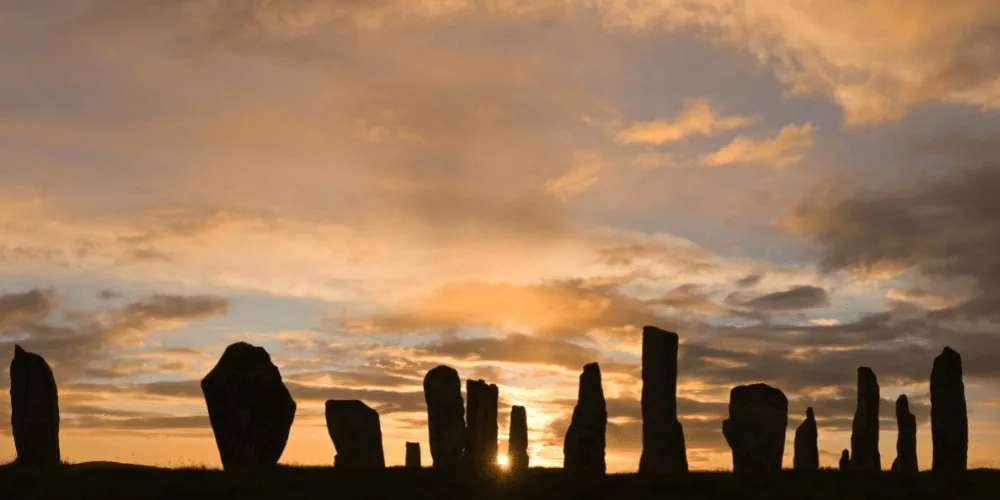
The ancient Celtic tradition of sabbats included three holidays related to the sun. Litha is the midpoint of these holidays, which pay homage to the different aspects of the Celtic sun god.
As a result, Litha often involves some bonfire–in particular traditions, observers light large wheels on fire and send them rolling down a hill.
Hilltop celebrations are significant in the original Celtic tradition. In their world, the very pinnacle of a hill was the highest point–the closest humans could get to the sun.
The Oak King

The celebration of Litha also involves the story of the war between the Holly King and the Oak King.
The Oak King is the ruler of the light half of the year, and the Holly King rules over the dark half. They are locked in a never-ending battle with one another for dominion over the world. Both kings fought tirelessly, even in their power. On the winter solstice, the Oak King finally triumphs and takes charge of the world.
From that moment onward, his light power reigns, and the sun’s energy grows stronger and stronger. Winter begins to fade, and spring takes hold. But as the summer solstice approaches, the Holly King’s strength returns, and he engages in battle again. The fight resumes at an even keel until the Holly King defeats the Oaken King and takes control.
This balance of power is central to Celtic folklore and cultural traditions. While summer is lovely and generous, it cannot be sustained forever. Winter must come, and the old must die so the new can be born. Nothing is forever. These two warrior kings guarantee it.
So even as observers celebrate the height of summer, they recognize its impermanence to enjoy it better while it lasts.
[[
](https://therelationshippsychics.com/wp-content/uploads/2023/11/PsychicsDraw-1200-×-300-px.hevc_.mp4)](https://shop.therelationshippsychics.com/optinskydp5t2)
Litha Celebrations
The modern pagan celebration of Litha can take many forms, but a few are absolute classics that practicing witches can benefit from adding to their repertoire.
Light a fire

As mentioned earlier, Litha is one of three sun-centered sabbats. In many cultures–Celtic included–the sun is equated with fire. So while Litha is not as fire-focused as Beltane, it’s still essential to spark a flame in your midsummer celebrations.
Decorate with flowers
Midsummer is about the earth’s abundance; few things symbolize it as perfectly as bright flowers. If you keep an altar, cover it in as many flowers as possible. Weave long-stem flowers together into a crown that you wear on the solstice and then dry as a keepsake.
Gift flowers to your friends, put them in vases around your house, and decorate cakes and your dining area with them.
Cook with fresh fruits and vegetables.

While the actual harvest celebrations will happen closer to the autumn equinox, Litha is in the middle of nature’s most fertile and productive season.
Fresh vegetables and fruits should be near at hand, either from a market or from your garden. Celebrate Litha by hosting a dinner party and making dishes filled with fresh produce. In other words, enjoy Earth’s bounty!
Setting Intentions for Litha
One of the most straightforward and sincere ways to observe Litha and incorporate it into your craft is to set intentions on that day for the next season of your year.
Below, we’ve written out a few intentions you can speak aloud as you observe the holiday.
For Bounty
“I call upon the god of sunlight to shine energy into my life. Where I have planted the seeds of my desires in the spring, let them now manifest. Let me pluck them like fruit from the universe that blesses me. May my soul never go hungry, and my craft always provide.”
For Appreciation

“May I always remember to appreciate the gifts the natural world bestows? Let me allow indulgence and show myself the grace of pleasure and happiness. May I never refuse a gift freely given nor neglect to show gratitude?”
For Acceptance
“Oh, Oak King, may I strive to be as gracious as you. Let me not forget that nature keeps a balance and that while I am blessed with it, I must not resent moments of struggle. Despite its power and ferocity, the sea is calm at midsummer. May I accept my fate with such peace?”
Litha Symbols
When it comes to observing any of the holidays, the most important thing is that you celebrate from the heart. If you don’t have access to the following symbols or decorations, your Litha celebration will not be any less for it. You’re all set as long as you step out into the sun and thank it for its blessings.
But if you want to participate in the traditional festivities, here are a few things you can incorporate for an authentic Litha celebration.
Animals
Butterflies, bees, horses, and cattle are some of the most common and plentiful at midsummer. But since the holiday also honors the calmness of the sea at that time of year, sea creatures and wading birds are also symbols.
Herbs and Flowers
Traditionally, basil, chamomile, lavender, heather, peonies, roses, sunflowers, St. John’s wort, and mugwort are all-season herbs. But depending on where you live, any flowers and greenery can be used to show thanks to nature.
Crystals
Amber, citrine, carnelian, tiger’s eye, and jade all crystals pay homage to the sunny brightness of the holiday. Similarly, gold, green, and yellow are the best colors for candles and other decorations.
Trees
The oak is the king of all trees this time of year, but elders, pines, and rowans are also thought to be blessed. Decorating these trees or decorating your home with leaves, branches, and berries from these trees will empower your observance.
Decorations
Flowers and foliage are an absolute necessity for Litha and seashells. Mirrors are crucial for reflecting the sun’s energy and images and symbols of the sun. And since Litha was often grandly celebrated at Stonehenge, any stone circle formation should also be decorated.
Why observe Litha?
No holiday practices are required for a witch looking to hone their craft. Many witches are entirely secular and leave out the premises of religion and holidays altogether. But magical energy is inseparable from nature, so you will get more effective results if you recognize these seasonal shifts.
Litha teaches us that accepting and celebrating bounty is one of the sincerest ways to honor it.
Wheel of the Year Holidays
Imbolc (February 1st)
Ostara (March 20-23)
Beltane (May 1st)
Litha (June 20-23)
Lughnasadh (August 1st)
Mabon (September 20-23)
Samhain (November 1st)
Yule (December 20-23)
[[
](https://therelationshippsychics.com/wp-content/uploads/2023/11/PsychicsDraw-1200-×-300-px.hevc_.mp4)](https://shop.therelationshippsychics.com/optinskydp5t2)
Looking to chat with a psychic now?
Connect with our psychics right away by installing our app Mystica Psychic Readings.